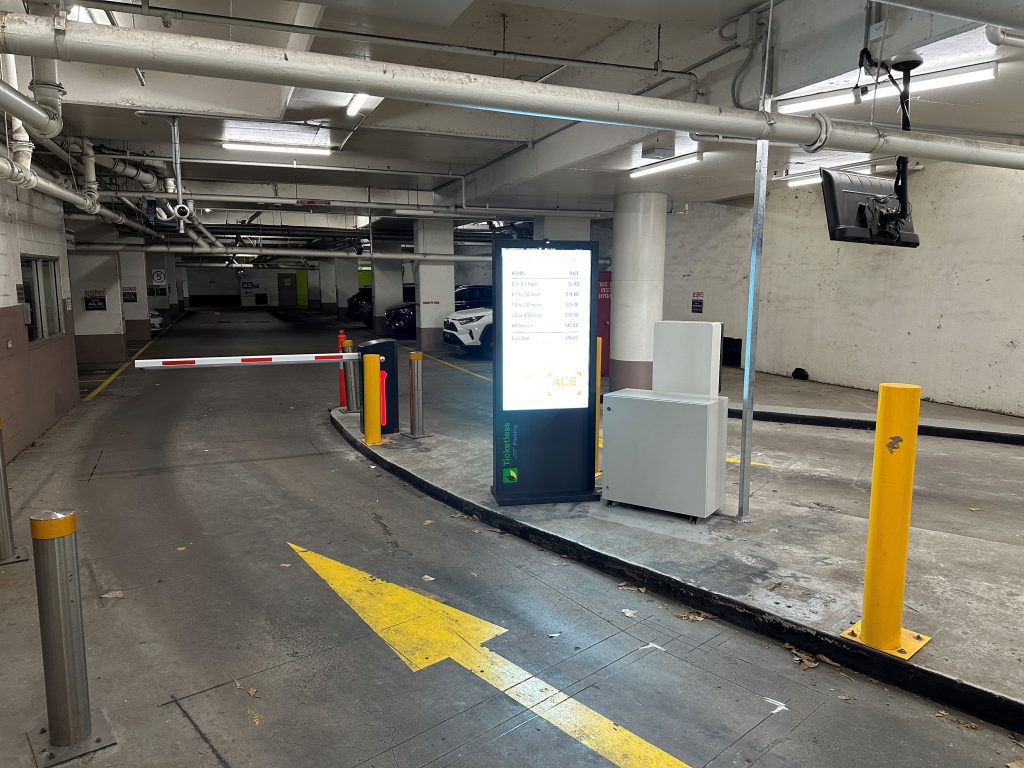
Retail parking that supports customer access, tenant experience and asset performance
Retail parking must make it easy for genuine customers to arrive, park and leave, while protecting availability, supporting tenants and managing the asset commercially. Ace Parking designs retail and shopping-centre parking operations around those connected outcomes.
The operating model needs to hold those outcomes together through daily peaks, changing demand and existing stakeholder commitments. Parking rules, customer communication, technology and response procedures are the mechanisms; the objective is reliable customer access without losing control of the asset.
The objective is access and turnover, not maximum occupancy
The objective is not to fill every bay for as long as possible. It is to provide the right access for the right customer at the right time, while managing long-stay or non-customer use, reducing friction and protecting the retail experience.
That can require balancing shopper turnover, tenant and staff commitments, accessible and parent parking, after-hours access, local-area behaviour, enforcement and revenue. The balance will differ by centre, and the rules need to reflect the actual trading and customer environment.
What the operating model needs to cover
The operating model may cover parking rules and wayfinding, free or paid parking settings, customer support, patrols and enforcement, retailer and staff arrangements, technology, revenue controls and reporting. The mix should be selected because the centre needs it, not because it forms part of a standard operator package.
Parking performance needs to be read in the context of the centre
For centre owners and management teams, parking performance needs to be interpreted alongside the wider trading and customer environment. Utilisation, turnover, validations, customer assistance, revenue, staff and tenant access or equipment issues can all matter, but the useful question is what changed and whether the centre needs to respond. Reporting should support that decision rather than become another operating output.
Customer issues become retail issues quickly
Poorly communicated parking terms, equipment outages or unresolved access problems can become a retail issue quickly. The response model should resolve what can be resolved remotely and provide a clear path to site or technical attendance when it cannot.
Rules need to work in the real centre
Timed free parking, paid options, terms and conditions, account arrangements or technology changes can all be appropriate. The decision should follow the centre’s demand pattern, tenant mix, local behaviour and customer journey rather than a generic retail-parking formula.
Where utilisation analysis shows the asset needs a different customer mix or stronger demand during quieter periods, the operating strategy can incorporate demand-management and customer-acquisition activity within the wider Parking Optimisation & Value-Added Services approach.
The operator should not create technology lock-in
The parking operation should not require the centre to adopt a proprietary operator ecosystem. Ace can work with suitable existing infrastructure, client-selected suppliers and independently specified technology. Our role is to connect the selected systems to practical parking rules, customer support and clear operating accountability.
Tenant, staff and stakeholder arrangements
Retail parking often includes existing stakeholder entitlements that need to be understood before changes are made. These can include where parking is located, the number of spaces available, agreed pricing, staff access, visitor arrangements and other site-specific conditions.
We work with the client team to translate those requirements into practical operating arrangements. Where the selected systems allow, authorised users can also manage routine changes such as staff, vehicles, access and validations online while Centre Management retains oversight of the parking environment.
Retail operating experience
Ace Parking has experience supporting parking operations in retail and shopping-centre environments where customer access, turnover, tenant requirements and asset performance need to be balanced.
At Sunshine Plaza, Ace Parking led the operational implementation and ongoing management of a ticketless parking environment designed around different customer and tenant requirements. Read the Sunshine Plaza case study and measured operating results, or read the launch announcement and windows-up customer journey.
Current New South Wales retail locations include Seven Hills Plaza and Eastwood Shopping Centre. Each location page provides current customer parking information for that site.
Frequently asked questions
How do you support customer turnover without creating unnecessary friction?
The parking model is built around the site’s demand patterns, free-period settings, tariffs, access rules and customer journey so genuine shoppers can use the car park while long-stay or non-customer use is managed appropriately.
How are tenant and staff parking arrangements handled?
Tenant and staff arrangements are based on the agreed entitlements and operating requirements for the asset. Depending on the site, this can include permits, accounts, credentials, designated areas, pricing arrangements, visitor access or other rules supported by the selected technology.
Can retail parking operate ticketlessly?
Yes. Where appropriate, LPR and ticketless systems can support entry, exit, payment and account arrangements without paper tickets, provided the technology suits the asset and operating requirements.
Can Ace work with technology selected by the client or its consultant?
Yes. Ace Parking is technology-agnostic and can work within suitable client-selected or independently specified technology environments. The operating responsibilities, integrations, support model and performance requirements are confirmed for the asset before implementation.
What happens when a customer or equipment issue needs escalation?
Site procedures define the escalation path from customer assistance and remote intervention through to on-site response, technical support or supplier coordination where required.
Discuss your retail parking operation
If your site is dealing with customer-access friction, tenant or staff parking complexity, equipment downtime, weak utilisation or underperforming revenue, we can review the operating model.