Licence Plate Recognition (LPR) and Ticketless Parking
Choosing the camera is rarely the hardest part of a ticketless parking project. LPR and ticketless parking should be designed around the operation, not just the camera. We start with the property, its customers, stakeholders, business rules and operating objectives, then assess, design, integrate and operate the technology around those requirements.
Ace Parking operates and supports more than 180 LPR lanes across retail, healthcare and commercial environments. Our technology-agnostic approach allows the operating model and equipment to be considered together rather than forcing a car park into a single proprietary platform.
Discuss LPR or ticketless parking for your asset
Where LPR and ticketless parking can fit
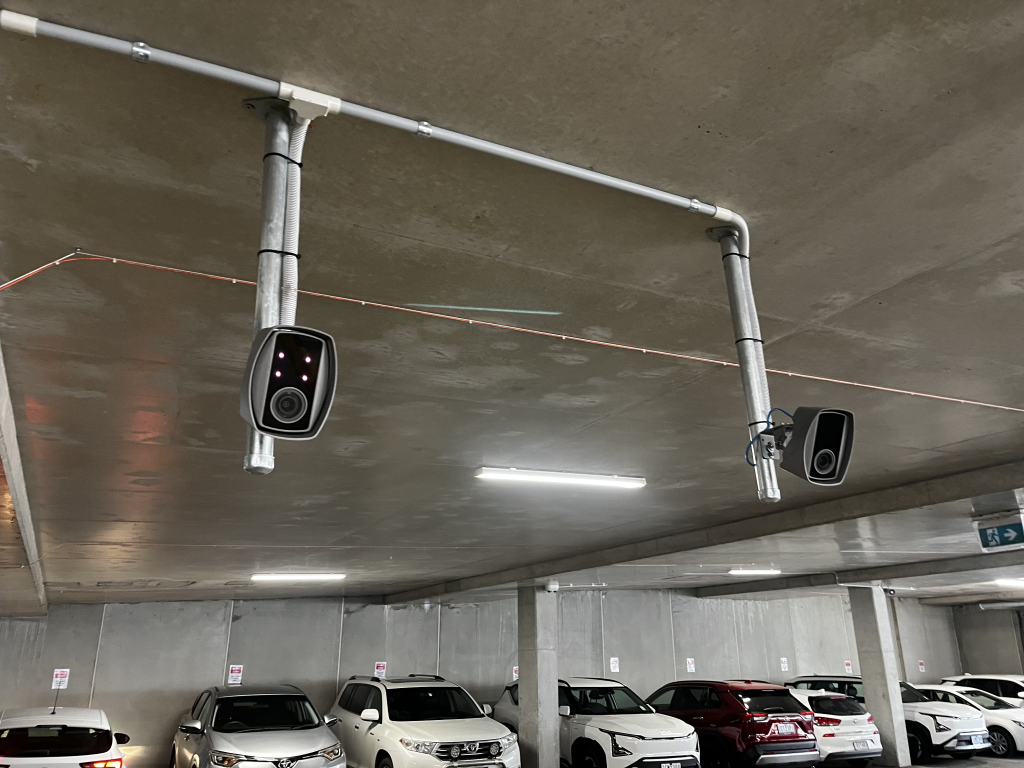
LPR uses cameras, recognition software and matching logic to associate a vehicle registration with entry, exit and other parking transactions. Depending on the site and operating model, it can support ticketless entry and exit, paid or free-period parking, staff and tenant access, validations, authorised vehicle lists, account-based parking and operational reporting.
The right configuration depends on the asset. A retail centre, hospital, commercial office and mixed-use development can each have different customer journeys, access rules, traffic patterns and exception requirements.
What the performance percentage actually means
LPR performance is often reduced to one percentage, but OCR accuracy, Plate Read and Plate Match are different measures. A system can imperfectly interpret an individual character and still correctly associate the entry and exit records for the same vehicle.
For an operator, the more useful question is whether the complete system can reliably support the required parking journey. When comparing systems, clients should understand what is being measured, what is excluded from the calculation and how the system handles character substitutions, matching tolerances and uncertain reads. For the detailed buyer guide, see LPR Accuracy: What Does 99% Actually Mean?.
System design matters
Camera position, lane geometry, lighting, vehicle speed, plate condition and the range of plate formats encountered can all affect recognition. Matching logic and system configuration also influence how effectively entry and exit records are associated.
More hardware is not automatically better. Single-camera and multi-camera arrangements should be assessed against the operating environment, required performance, redundancy, security, capital cost and maintenance burden.
See LPR and ticketless parking in operation
These examples from Ace Parking sites show how LPR supports free-flowing vehicle movements and a windows-up ticketless customer journey in live operating environments.
LPR supporting smooth car park traffic flow
Ticketless entry using Licence Plate Recognition
Ticketless exit using Licence Plate Recognition
Shopping centre parking system providing free-flowing parking management in a high-traffic environment
Ticketless parking seamless traffic flow using Licence Plate Recognition
Business rules, payments and integrations
The recognition system needs to work with the rules of the car park. Free periods, tariffs, grace periods, validations, staff and tenant parking, authorised vehicles and other conditions need to be translated accurately into the operating system.
Where relevant, LPR may also need to integrate with payment systems, access control, customer or tenant administration, reporting platforms and other property technology. Ace considers these interfaces as part of the operating design rather than treating the camera as a standalone purchase. Our article Planning Ticketless Parking? Start With the Operation, Not the Camera explains why the operating outcome should shape the technology selection.
Exceptions and customer journeys
Even a well-performing system will encounter exceptions. The operating model should define what happens when a registration cannot be confidently matched, a customer enters an incorrect plate, a vehicle changes, a payment or validation cannot be located, or an authorised user requires assistance.
The objective is a parking journey that remains straightforward for customers while maintaining appropriate operational, revenue and access controls.
Maintenance and lifecycle support
LPR performance depends on more than the condition of the camera. Physical equipment, processing hardware, communications, firmware, application software and recognition libraries all need appropriate ongoing care.
Plate formats and recognition requirements also change over time. Keeping firmware, plate databases and recognition libraries current can materially affect system performance. Lifecycle planning should therefore consider the complete technology stack, technical support, cybersecurity, compatibility and future integration requirements. See LPR Maintenance Is More Than Cleaning the Camera for the key factors that can affect ongoing performance.
Proven across different operating environments
Ace Parking has extensive LPR and ticketless parking experience across retail, healthcare, commercial, hospitality, education and destination environments. Current and historical reference sites include Goodman Property, Sunshine Plaza, Seven Hills Plaza, Arden Gardens, Lygon Court, Cardigan House, The Bend, Grampians Health, Pullman Melbourne Albert Park and PLC, with LPR also supporting healthcare and specialist medical environments including Monash Health and Northern Specialist Medical Centre.
The value of these references is not that every site uses the same configuration. It is that the systems have been designed around different customer journeys, parking rules and operating conditions while maintaining reliable vehicle recognition and operational control.
Sunshine Plaza provides a current quantified example: across more than 830 spaces, the system processed 136,431 licence plates in a full month and achieved a 99.53% Plate Match rate. Other reference sites demonstrate the same underlying capability across different sectors and operating models.
Read how Sunshine Plaza moved to a windows-up ticketless parking experience.
Choosing the right approach
Ace Parking assesses LPR and ticketless parking as part of the wider parking operation. The appropriate solution depends on the asset, customer journey, business rules, technology environment, support model and tolerance for operational exceptions.
For broader technology planning, see Equipment & Technology. For operational improvement and site assessment, see Car Park Consulting and Parking Optimisation & Value-Added Services.